
Your organisation already has the knowledge.
Cybil helps you use it.
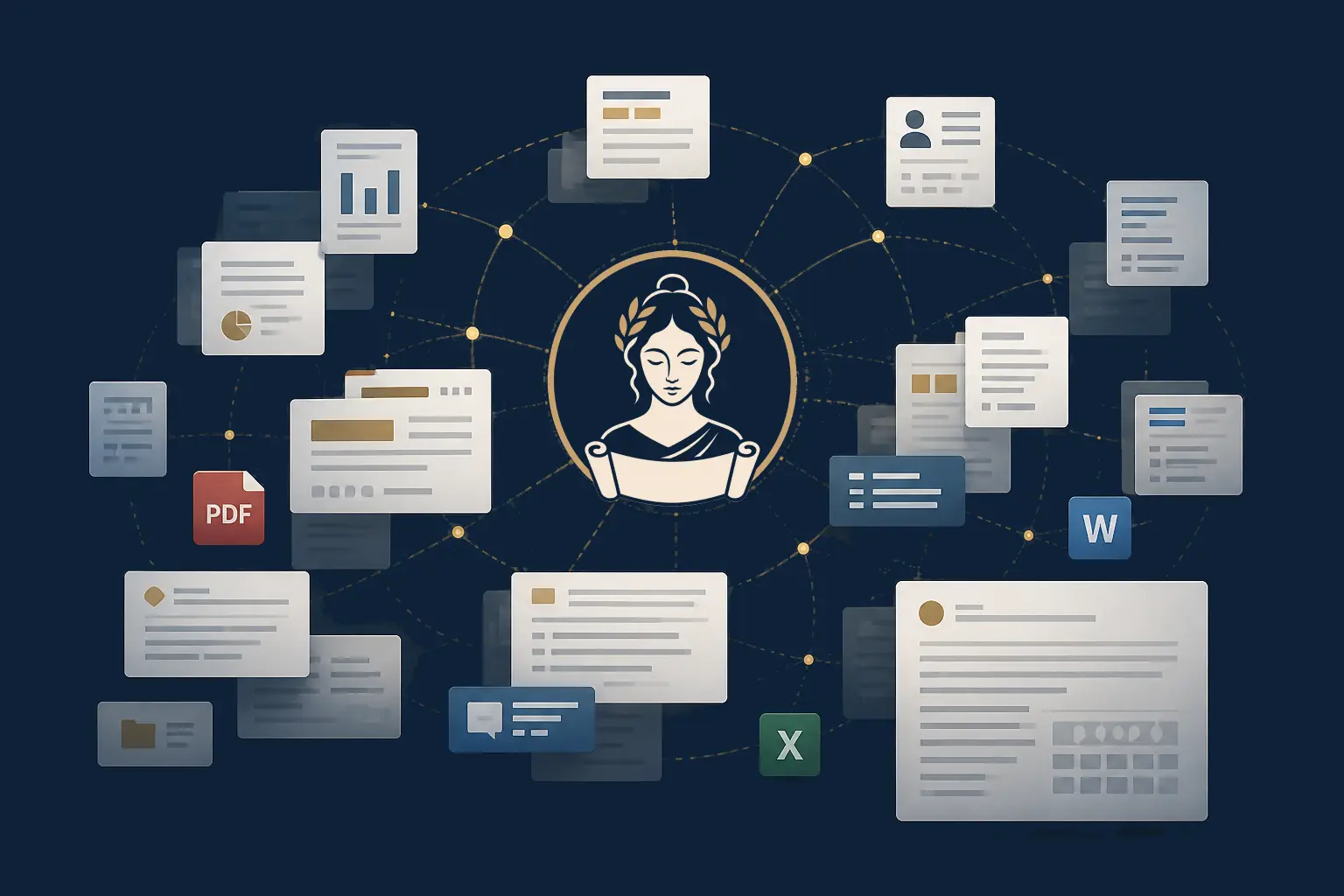
Cybil is an AI-powered knowledge platform that helps teams search, interrogate, extract, structure and reuse knowledge from reports, proposals, policies, research documents and cloud repositories.
How it works
Cybil connects to your organisation’s documents, turns them into searchable knowledge, and helps you reuse that knowledge in chats, datasets, reports and other structured outputs.
Connect your content
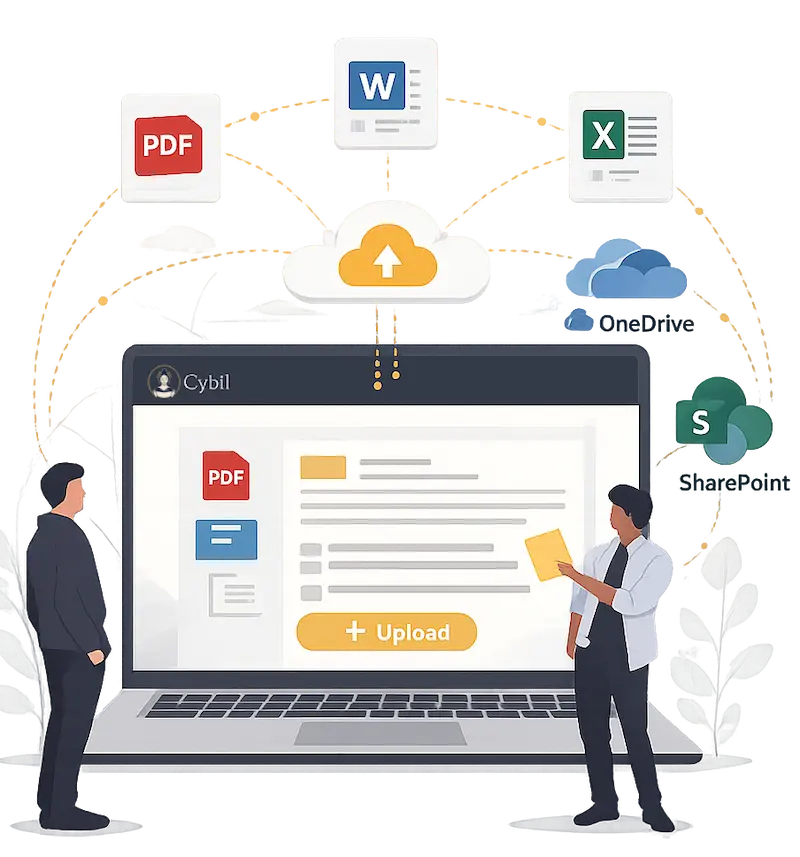
Upload documents or connect existing repositories such as OneDrive and SharePoint.
Cybil works with the documents your organisation already uses: reports, proposals, policies, research outputs, meeting records and other source material. Content can be uploaded directly or synchronised from existing cloud repositories, without forcing teams to move everything into a new document system.
Index and organise knowledge
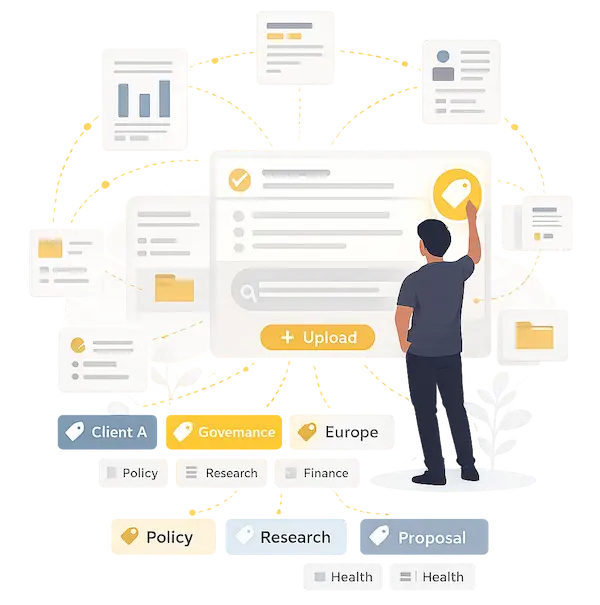
Cybil extracts text, summaries, keywords and searchable sections.
Documents are processed into reusable knowledge assets. Cybil extracts page and section-level content, creates summaries and metadata, and supports tags and taxonomies so teams can filter knowledge by client, project, sector, theme, document type or other organisational categories.
Search, extract and generate
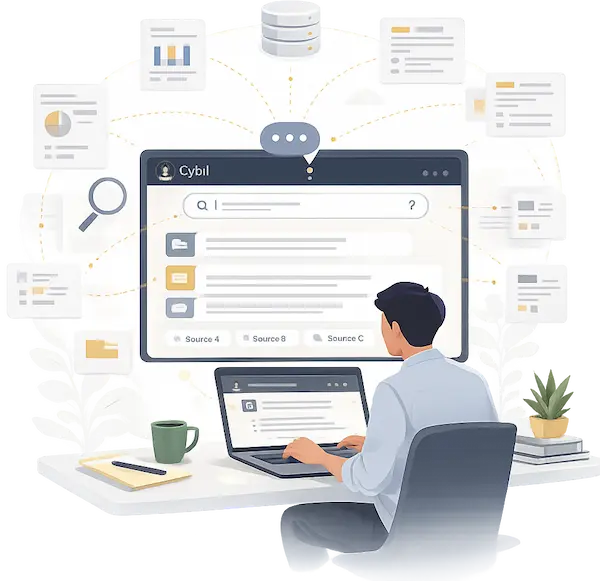
Ask questions, create datasets, and generate grounded outputs.
Users can search across document collections, chat with selected content, or run the same instruction across multiple documents to produce structured results. Responses can remain connected to source material, helping users verify answers and trace outputs back to the underlying documents.
Reuse knowledge in new work
Use extracted knowledge in reports, briefs, proposals or recurring outputs.
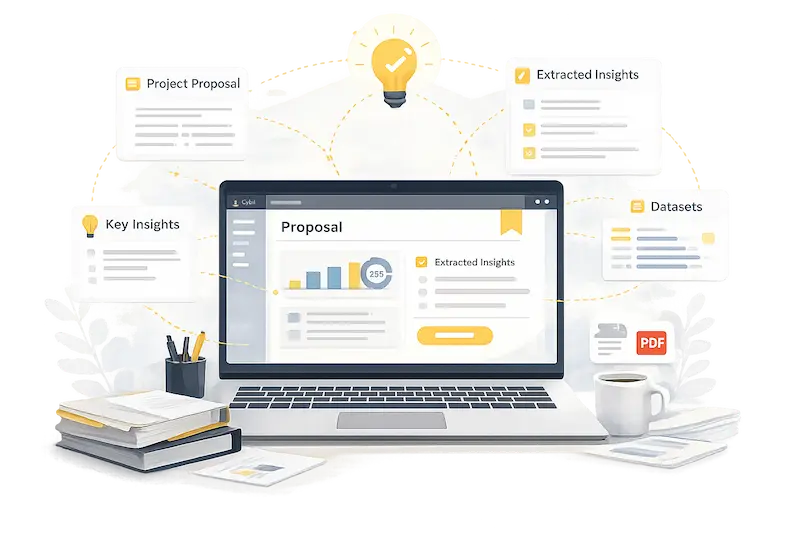
Cybil is designed to make organisational knowledge reusable. Extracted insights, datasets and selected source content can feed into new documents and structured outputs, helping teams build on previous work instead of starting again each time.
Use cases
Cybil is built for teams that need to find, structure and reuse knowledge across large collections of documents.
Reuse past project knowledge
Find relevant examples, methodologies, lessons, risks and recommendations from previous reports, proposals and project documents.
Good for: consultancies, advisory firms, internal strategy teams.
Build research and evidence summaries
Search across studies, reports, interviews and policy documents to produce grounded summaries, syntheses and briefing notes.
Good for: research organisations, development agencies, public sector.
Extract structured information at scale
Run the same instruction across many documents to create comparable outputs such as risks, indicators, themes, project profiles or compliance findings.
Good for: evaluations, transcript analysis, compliance reviews, risk registers and project profiling.
Generate reports, briefs and proposals
Use selected documents, datasets and source material to draft structured outputs such as reports, proposals, policy briefs and recurring updates.
Good for: client reports, policy briefs, board packs, proposals and recurring programme updates.
Preserve institutional memory
Help new staff discover what the organisation already knows, even when knowledge is buried in old folders, reports and project archives.
Good for: onboarding, staff handovers, knowledge retention and teams with large project archives.
Improve governance and traceability
Produce AI-assisted outputs that remain connected to source material, so users can verify claims and trace answers back to documents.
Good for: public-sector work, regulated environments, research outputs and decision-support documents.
Why Cybil
Cybil is built for organisations that need more than document storage and more than a generic chatbot.
Organisational knowledge, not isolated chats
Cybil keeps documents, extracted insights and generated outputs available for reuse across teams and workflows.
- Works across document collections
- Supports reusable datasets and outputs
- Helps teams build on past work
- Complements existing repositories
Why it matters: knowledge remains useful beyond a single chat session.
Grounded, traceable outputs
Cybil is designed to keep AI-assisted responses connected to source documents, pages, sections or datasets.
- Reference source material
- Verify claims and outputs
- Inspect underlying documents
- Improve trust in AI-assisted work
Why it matters: teams can use AI outputs in serious work with more confidence.
Repeatable AI workflows
Cybil supports structured extraction, reusable templates and document generation workflows.
- Run instructions across many documents
- Create structured extraction outputs
- Generate reports, briefs and proposals
- Support recurring knowledge processes
Why it matters: AI becomes part of operational knowledge work, not just a once-off assistant.

About Cybil
Cybil was created to solve a problem common to knowledge-heavy organisations: valuable institutional knowledge exists, but it is scattered across reports, proposals, policies, research documents, meeting records and cloud folders.
The platform is being developed as an AI knowledge layer that sits above existing content systems such as OneDrive and SharePoint. Its purpose is not to replace document repositories, but to help teams search, structure, extract, reuse and generate value from the knowledge they already have.
Cybil is currently focused on supporting pilot engagements with organisations that work extensively with documents, evidence, reporting and institutional knowledge.
Request a demo
Tell us a little about your organisation and we’ll follow up to arrange a short Cybil walkthrough.
See Cybil in action
Walk through knowledge search, structured extraction, datasets and report generation using realistic workflows.
Discuss your use case
Share the documents, teams and outputs you work with so we can assess where Cybil may fit.
Explore pilot options
Cybil is currently best suited to document-heavy teams with clear knowledge workflows.